


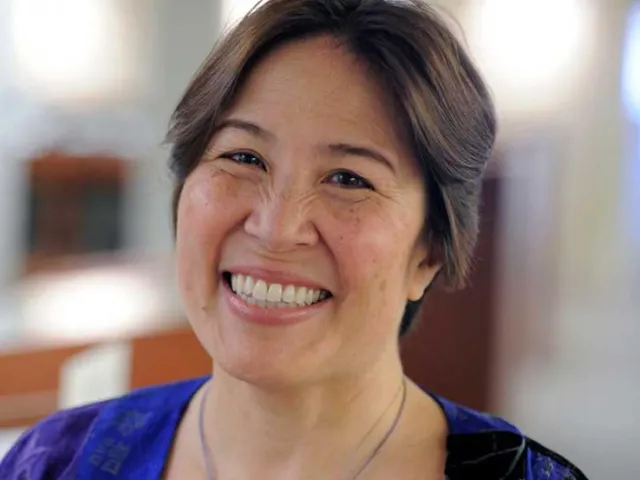
On January 28, 2026, Dickinson’s Medieval and Early Modern Studies Department hosted its annual lecture. The department welcomed Professor Emerita of English and the Study of Women and Gender at Smith College, Naomi Miller. The event took place in the Stern Center Great Room at 6 p.m., followed by a dinner afterwards.
Professor of English Carol Ann Johnston introduced Miller. In the 1970s-80s, Brown University published works of women that had not been published before; prior to this, scholars did not have access to these writers’ work unless they went to an archive. Studying at Harvard, Miller decided to studyLady Mary Wroth, the first Englishwoman to write fiction prose. Over the course of her career, Miller has published 10 academic books. Eventually, she began writing historical novels about underdiscussed female writers . In her talk, Miller spoke on the complications of being a scholar bound up by the restrictions of writing about early modern women and how she cast herself free from those limitations.
“While everyone knows about Shakespeare, no one knows about these women writers,” she said.
When teaching her class “Shakespeare Sisters,” Miller helped her students become acquainted with the works of early modern female writers. Although Wroth is credited as the first woman to write a prose romance, what makes her amazing is her writing, not the fact that she was the first woman to do it. Miller recounted Wroth’s first work, Urania, which follows a female protagonist as she confides in her best friend after her husband has been unfaithful to her. After reading it for herself, Miller thought, “This is amazing!” and knew that nothing had ever been written like that in prose romance before. As a writer herself, Miller welcomes the collaborative journey of reader and author to pursue the thread of the story through historical facts, uncovering the truths of early modern women authors who refused to be silenced and empathizing with their fears and joys.
Miller shared that fiction enabled her to use her imagination in combination with the lived experience of these early modern women, and allows her to bring their voices to the faces of modern readers who have never heard of them. With the widespread erasure of the actual words of these women, what disturbs her is ignoring and silencing the voices who were already renounced for their words in their own lifetimes. Miller shared with the audience the most important advice she’s been given as a novelist from her mentor, which was that her responsibility “is not to the story, [and] not to history.” Her job was to “tell the story that matters.” Entering imaginatively into early modern women’ s lives, Miller imagines what happened and works to “braid [her] inventive thoughts” into the story and make them come alive once more.
