


Dickinson has begun to host several events to celebrate and commemorate Black History Month.
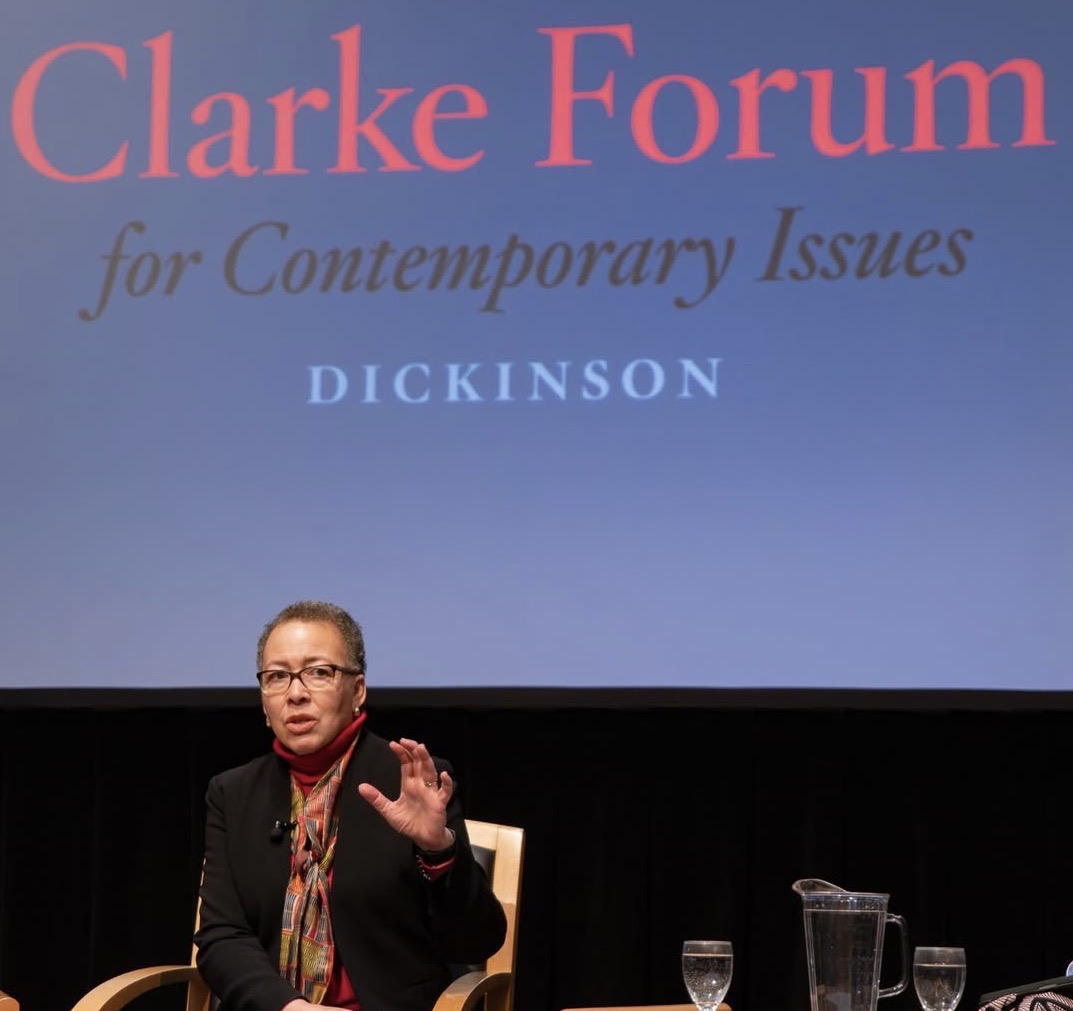
The Clarke Forum for Contemporary Issues sponsored a talk on February 3 titled “The Psychology of Belonging: Navigating Identity on a College Campus with speaker Dr. Beverly Daniel Tatum.” Tatum is an award-winning psychologist, scholar, higher-education leader, author and President Emerita at Spelman College. She is an expert on topics in racial identity development, the impact of race in the classroom, higher education leadership and giving strategies on how to create inclusive campus environments.
Tatum spoke in conversation with Dickinson’s Chief Diversity Officer Tony Boston and Africana Studies contributing faculty member and Assistant Professor of Educational Studies Jacquie Forbes. Throughout the talk, Tatum explored social identity formation, challenges confronting higher-education leaders and institutional efforts needed to foster inclusion, a sense of belonging and psychological safety for its students. The talk pulled from her best-selling book, “Why Are All the Black Kids Sitting Together in the Cafeteria? And Other Conversations About Race,” which was first published in 1997.
She talked about questions she received from her white students at a previous institution who wondered why they had to wait until they were juniors or seniors in college to have conversations about race. Interested in understanding the reasons for this disengagement herself, Tatum began asking K-12 educators, primarily high school teachers, about why they were not engaging students in race-related conversations.
“They said, almost universally, ‘We don’t know how to have those conversations. No one had those conversations with us,” she said.
Worried about the topics as a whole and fearing the potential start of conflict within the classroom, these teachers refrained from engaging students in these dialects in the first place. Tatum began hosting workshops for these educators, who frequently asked her “why are all the Black kids sitting together in the cafeteria?”
She explained that the question can, in part, be understood as confusion from outsiders, as the process of desegregating the school system was perceived as a “one and done” situation by some; rather than stick together by race, some people assumed that desegregation would immediately lead to the immediate immersion of Black students in the social environment of schools they originally were not allowed in.
This aspect of the question led Tatum to not only talk about race in the classroom but also helping educators understand the process of adolescent racial identity formation. Tatum describes the book as having three parts: What, So What, and What Now? What is racism and how do we understand it, and so what does that mean in terms of how we think about ourselves and other people, and now what do we do about it?
Dickinson’s student population is made up of 23 percent domestic students of color, with 4 percent being African Americans. Hearing this information on the floor, Tatum then talked about the importance of belonging as it relates to retention rates and student success. “A sense of belonging is very important to success and retention. In fact, it’s one of the best predictors. If someone feels like they belong in a place, they’re likely to stay,” she said.
Introducing the ABCs, an acronym used in her latest book “Peril and Promise: College Leadership in Turbulent Times,” she explained how the A component–”affirming identity”–is inherently foundational to have effective leadership, even more so than B (building community) and C (cultivating leadership). She gave the example of everyone in the audience being in a large photograph together and asked the audience to imagine a situation where they were constantly being left out of the photo. Were this to happen repeatedly, over time the student would not even bother to take the photo with the group, as they have already internalized that they won’t be represented. “When we are intentional about asking a key question–that key question is ‘Who are we missing from the picture?,’ we do a much better job at making people feel heard,” she said.
Tatum explained how, as young children, people are discouraged by their environment from engaging in race-related topics, due to the discomfort it often brings people.
The idea that it would be easier to not talk about it creates a sense of guilt, shame and embarrassment around topics of race and racial identity formation. Another result of that is reflected in the classroom environment, as teachers and students alike are faced with problems with no foundation on how to talk about them in a safe, respectful way.
During the 2020 resurgence of the Black Lives Matter movement following the murder of George Floyd, Tatum expressed her surprise at the amount of calls she received from corporate entities who asked for help on behalf of their employees that wanted assistance on educating their children about race.
The “hush-hush” nature of race-related dialogue has been heavily present in people’s lives, but thankfully, younger generations are eager to dive into these topics.
“Young people do want to have these conversations, and a part of that is being young,” she said. “You’re trying to figure out how the world works, and this is a major factor. The older people around you have been socialized, for the most part, not to talk about it and are quite anxious about it and would prefer not to.”
She also talked about the important role that school leaders play in affirming the identities and work of their institution, whether it be faculty or students. Their physical presence at events, the words they use when speaking about particular issues, and even smaller things like posters around campus, go to show the important weight placed on matters of identity.
